The Consent Form Was the Easy Part: Where Your Trial Data Actually Goes After You Drive Home
In 2006, a woman in her fifties outside Columbus enrolled in a Phase III trial for an arthritis drug. She filled out a diary, showed up for eleven visits, wore a blood pressure cuff home for a week, and answered questions about her sleep that seemed oddly personal for a joint medication. Then the trial ended. She got a thank-you card and a modest check for her time.
Her data, though, had a whole second life ahead of it — one she never heard about, and one that didn't always go well.
Phase One: The Clipboard Becomes a Database
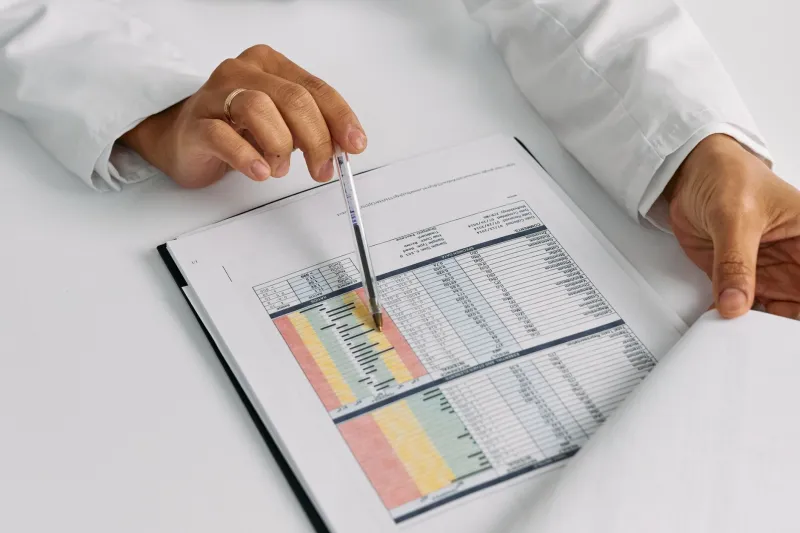
The first stop for any trial participant's information is data entry, and this is where the first leaks happen. A nurse transcribes a handwritten diary into an electronic case report form. A lab result gets keyed in twice because the fax arrived blurry. Each typo is small; multiply them across thousands of patients and millions of fields, and error rates become a real scientific variable.
This is why good trials hire monitors — people whose entire job is to fly to research sites and compare source documents against the database, line by line. The FDA calls it data verification. In practice, it's an auditor with a highlighter checking whether the number on the screen matches the number on the paper.
Here's the uncomfortable part: monitoring is expensive, so many modern trials have shifted to "risk-based monitoring," which means fewer site visits and more spot-checking. Your data point might be verified with great care. Or it might be sampled, not audited — a statistical guess about its own accuracy. Yes, trials use sampling to quality-check their samples.
Phase Two: The Lockbox
Once enrollment closes, the database gets "locked." Nobody — not the sponsor, not the investigators — is supposed to touch the raw numbers until the analysis plan, written before the trial started, is executed. This lock is the trial's most sacred ritual, and it exists because of history: researchers peeking at results mid-study and quietly steering outcomes.
Your data now lives in a system like Medidata or Oracle's clinical software, pooled with everyone else's. Individually, you were a person with sore knees. Collectively, you're a hazard ratio.
This is the moment N equals many actually happens. No single participant's experience can tell you whether a drug works — the woman in Columbus felt better, but so did people on placebo, because arthritis flares and remits on its own. The truth only emerges when her row in the spreadsheet is averaged against thousands of others. It's genuinely one of the best ideas humans have ever had.
Phase Three: The FDA Reads It (Once)
When the sponsor submits for approval, the FDA's reviewers get access to the raw patient-level data and often re-run analyses themselves. This double-checking has caught real problems — reviewers have found effects that vanished under different statistical assumptions, and subgroups that looked miraculous only because someone drew the line in a flattering place.
But here's a quirk worth knowing: the FDA's review is confidential. You can't read it. The public gets the approval decision and the prescribing label; the full forensic audit of the data stays behind a firewall.
Phase Four: The Quiet Decade
After approval — or after failure — the data enters its longest phase: the shelf.
Trial sponsors are required to register results on ClinicalTrials.gov, but enforcement historically ranged from sluggish to nonexistent. Studies have found that well over half of trials never published results within the mandated window. Your data point might sit in a sponsor's server for a decade, contributing to nothing, read by no one.
And when results are published, the public version is a summary — tables and p-values, not raw records. Independent researchers who want to re-analyze the patient-level data must ask the sponsor nicely, sign restrictive agreements, and wait. Sometimes they get access. Sometimes they don't.
This matters more than you'd think. Re-analyses of published trials have found mislabeled outcomes, "lost" side effects, and endpoints that quietly changed between the registered plan and the paper. The system's self-correction depends on people being allowed to look.
Phase Five: The Retraction
Sometimes the story ends badly. In 2015, the off-pump surgery literature took a body blow when a prominent surgeon's trials were retracted after an investigation found fabricated data — trials that had influenced actual surgical guidelines. Thousands of patients had been operated on differently based on numbers that, in part, never existed.
Retraction is the system working, technically. But notice the timeline: the fraud was uncovered years after the papers published, and only because a handful of persistent journalists and researchers kept pulling threads. The audits that caught it weren't built into the system. They were heroic exceptions.
Who Actually Owns Your Numbers?
Here's the answer nobody likes: not you, mostly. Participants rarely retain rights to their individual data, and while the 21st Century Cures Act and newer information-sharing policies have pushed sponsors toward broader access, the default remains that your rows belong to whoever funded the study.
There are signs of drift in a better direction. The FDA now requires data-sharing plans. The All of Us research program lets participants see their own records. Some trials return individual results to participants — a practice that was, remarkably, considered radical until recently.
The woman in Columbus never learned what happened to her arthritis drug. For the record, it never got approved; the pooled data showed the benefit didn't outweigh the risks. Which means her eleven visits, her sleep questionnaires, her seven days of blood pressure readings — the parts of her life she donated to science — did exactly what they were supposed to do.
Not every data point changes the world. But every rejected drug is a few thousand data points voting "no," and that vote only counts if nobody fudges the ballots afterward.