You'd Never Ship a Feature to a Sample of One. So Why Is Your Sleep Schedule Any Different?

Photo: Llywelyn2000, CC0, via Wikimedia Commons
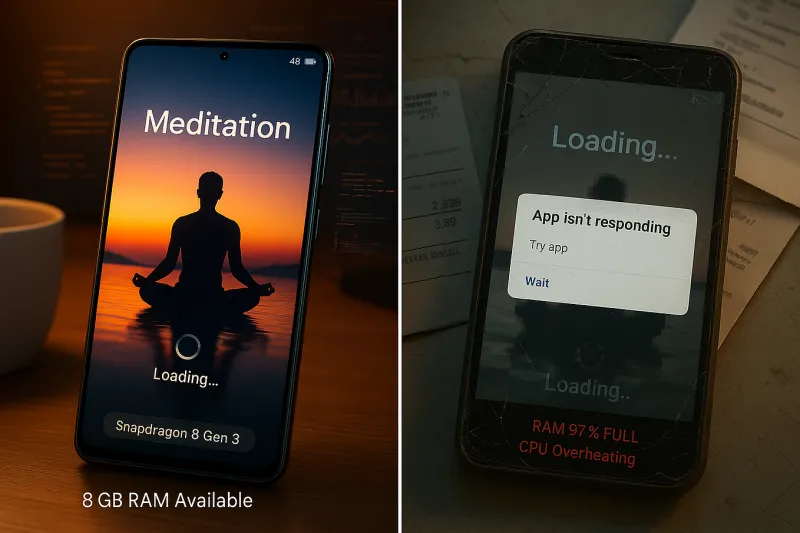
Somewhere in Silicon Valley right now, a product manager is refusing to ship a redesigned checkout button because the test only ran for four days and the sample was 'too small to be meaningful.' That same person, eighteen hours later, will try melatonin gummies for one week, feel pretty good on Wednesday, and declare the whole thing a triumph.
This is not a hypocrisy problem. It's a human one. But it's worth poking at, because the tools to fix it are sitting right there in the same person's browser history.
The Office Brain vs. the Home Brain
Anyone who has worked at a company that does serious A/B testing has absorbed a specific set of reflexes. You learn that a 3% lift in a test with 200 users is noise. You learn to wait for the test to hit full duration before peeking at results, because early numbers lie. You learn that the customer who emailed you saying the new design 'changed their life' is an anecdote, not a data point.
Then you go home and try a morning routine you read about on a podcast, keep it up for nine days, feel roughly the same or slightly better, and conclude the routine works.
The difference isn't intelligence. The difference is that at work, you're deciding for a population. At home, you're deciding for yourself — and the stakes feel personal enough that your brain switches from 'analyst' to 'advocate.' You want the cold plunge to work. You spent $180 on the tub.
Why Testing Yourself Is Weirdly Hard
Here's the uncomfortable statistical truth: you are a population of one, which means your experiment has no comparison group. Tech companies get causality by splitting traffic — half of the users see version A, half see version B, and the difference between the groups does the heavy lifting. With one person, there's no one to split.
Or is there? The trick, borrowed from a research tradition older than the internet, is to split you across time.
The Homebrew A/B Test
The method researchers use is called an N-of-1 trial, and it's basically an A/B test where the same human occupies both arms of the experiment. The rules are simple enough to fit on a sticky note:
- Alternate conditions. Instead of 'try the new thing for a week,' alternate: three days on the intervention, three days off, repeat. Week one you meditate, week two you don't, back and forth for a month or more.
- Randomize the order. Flip a coin or use a random number generator to decide whether a given stretch is 'on' or 'off.' If you always follow the good habit after a bad weekend, your data is contaminated by your weekends.
- Pick a measurable outcome in advance. Not 'do I feel better' but 'hours of sleep per night from my tracker,' or 'time to fall asleep,' or a 1–10 rating logged each morning before you remember which condition you were in.
- Don't peek early. The same rule from work applies. Two weeks of alternating data will look like a rollercoaster. Wait until you've completed the full run before drawing conclusions.
Does this guarantee truth? No. Seasons change, work deadlines hit, your kid gets a cold. But those disruptions tend to add noise, not false signal — and a month of alternating data beats a week of vibes by an embarrassing margin.
The Placebo Lives in Your House Too
One more wrinkle: you can't be blind to your own experiment. If you know you're on the meditation weeks, you'll probably sleep better on the meditation weeks, partly because you expect to. That expectation effect is real, it's documented, and it's the same reason drug trials go to such lengths with sugar pills.
You can't fully solve this alone, but you can blunt it. Use objective outcomes your expectations can't easily reach — a sleep tracker doesn't care what you believe. Better yet, have someone else randomize your schedule so you don't know which condition starts tomorrow.
What a Realistic Personal Experiment Looks Like
Say you want to know whether cutting out alcohol after 8 p.m. improves your sleep. A defensible homebrew version:
- Run six weeks of alternating three-day blocks, assigned by coin flip.
- Record nightly sleep duration and a morning grogginess rating, every day, including the boring ones.
- At the end, average the 'on' blocks against the 'off' blocks.
If the difference is small and wobbly, you've learned something valuable for free. If it's large and consistent, you've earned more confidence than most wellness influencers will ever have. Either way, you've spent six weeks being the kind of person your product team wishes you were at home: someone who waits for the data.
The sample size of one is a limitation. It doesn't have to be an excuse.