The Universe Loves Averages: How Randomness Writes Your Supplement's Five-Star Reviews
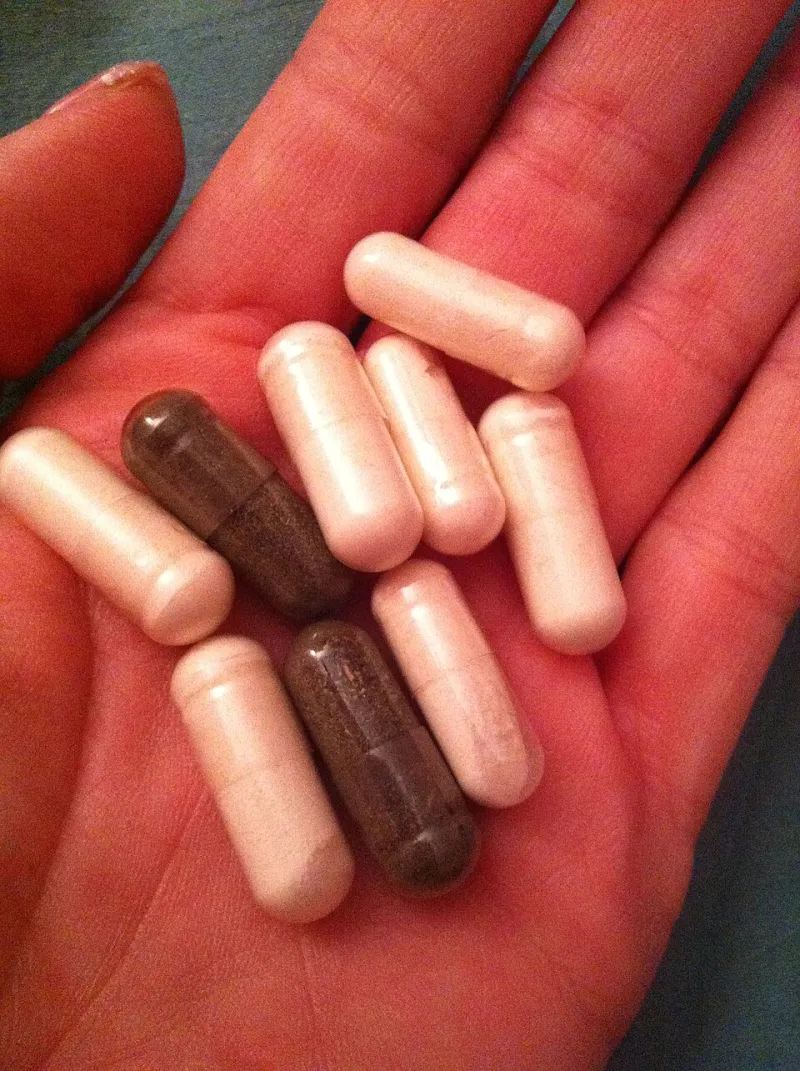
Photo: Ashley Steel, CC BY 2.0, via Wikimedia Commons
The Testimonial Machine That Never Sleeps
Scroll through reviews for basically any wellness product — the acne gummies, the recovery patches, the credit-repair app your cousin swears by — and you'll find the same story told a thousand ways: "I was at rock bottom. I tried this. Now I'm fine."
Here's the uncomfortable part. Most of those reviewers are telling the truth. They really were at rock bottom, and they really did improve. What they got wrong is the cause. Because "rock bottom" is exactly where things stop going down and start drifting back up — whether or not you swallowed anything.
What Regression to the Mean Actually Means
Statisticians have a boring name for it: regression to the mean. The idea is simple enough to fit on a napkin. Any time you measure something at an extreme — your worst skin month, your slowest 5K, your lowest credit score — a big chunk of that extremity was luck. Bad luck, sure, but luck. And luck doesn't repeat itself.
Measure those same people again later and their numbers drift back toward their personal average. Not because the universe is kind. Not because of the supplement. Because extreme readings are part signal, part noise, and the noise always fades.
Francis Galton spotted this in the 1880s studying the heights of parents and children, and he was so spooked by it he originally called the effect "regression toward mediocrity." He wasn't being mean. He was being accurate.
The Worst Week Is the Best Marketing
Now layer a bit of consumer behavior on top. When do people buy the miracle product? Almost never on an ordinary Tuesday. They buy during the flare-up. The week the acne is at its angriest. The month the marathon training has fallen apart. The day the credit score alert makes them physically wince.
That's not a coincidence — it's the entire business model. Products that promise to fix a problem are purchased precisely when the problem is at its peak. And the peak, statistically speaking, is a lie. It's a temporary spike that would have collapsed on its own.
So the timeline writes itself:
- You hit your worst point (partly bad luck).
- You buy the product.
- Your numbers drift back to normal (would have happened anyway).
- You leave a five-star review and tell your book club.
Nobody in that chain is lying. Everybody is wrong.
Glitchy Apps and the Same Old Trap
This isn't just a supplement problem. Your sleep app that "improved your rest scores" after you paid for premium? The fitness tracker that congratulated itself on your "recovered" resting heart rate? Subscription software is regression to the mean with a billing cycle attached. The worse your week, the more likely you are to upgrade — and the more guaranteed the improvement looks when your numbers quietly return to baseline.
Even entire industries run on this. Credit repair outfits love customers right after a score tanked. Some of what they do is legitimate paperwork wrangling. But a meaningful chunk of the "success stories" are just scores remembering where they used to live.
The Sports Illustrated Curse Was Never Real
If you want a clean, American, non-supplement example, look at the so-called "Sports Illustrated jinx." For decades, athletes who landed the cover seemed to slump afterward. Fans saw a curse. Statisticians saw arithmetic: you get on the cover by having a career-best stretch, and career-best stretches tend to be followed by ordinary ones. The magazine didn't jinx anyone. It just selected for people standing at the top of their own noise.
Same mechanism, different jersey.
The Only Question You Need
You don't need a statistics degree to protect yourself. You need one question, asked before you buy anything that promises to fix you:
Compared to what?
Compared to your worst week ever? Then yes, improvement is nearly guaranteed, and the product deserves no credit. Compared to a group of similar people who got a sugar pill and a sympathetic phone call? That's a real test — and it's the test most products conspicuously never run.
When a company shows you before-and-after photos, ask who the "after" group is being compared against. When an app brags about user outcomes, ask whether the users joined during a crisis. When a testimonial says "nothing else worked," ask how they know nothing else would have worked either — including nothing at all.
One of Many, Not One of One
The deeper lesson is the one this site keeps coming back to: a sample size of one — you, your flare-up, your review — can't distinguish luck from medicine. Only groups can. N equals one is where snake oil lives. N equals many is where the truth gets a chance to speak.
Your miracle supplement probably didn't work. But don't feel bad. Something did work: the average, quietly pulling you back home.