Your Brain Would Rather Hear One Guy's Story Than Read 40,000 Charts

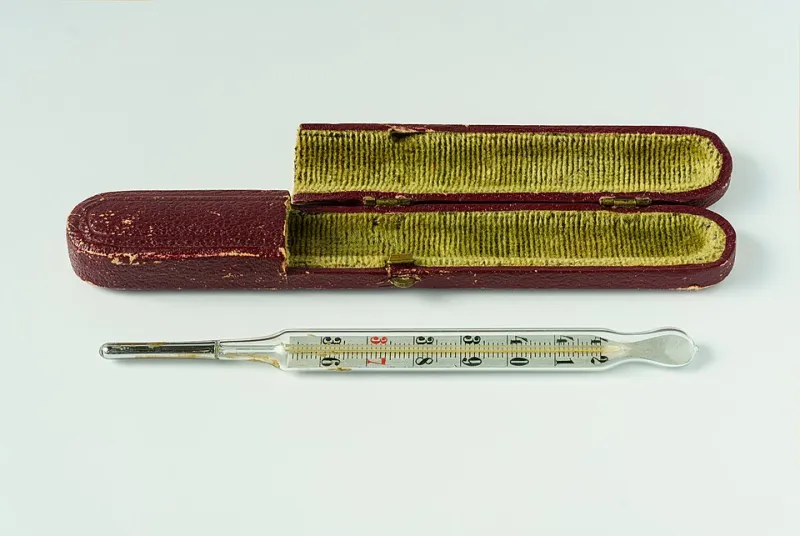
Photo: Saddam19, CC BY-SA 4.0, via Wikimedia Commons
Somewhere in America right now, a person is telling their book club about the CBD gummies that changed their life. Across the table, someone who actually read the research is quietly losing the argument.
It's not that the research is wrong. It's that the human brain never signed the contract we think it did. We like to imagine we're rational consumers of evidence, weighing effect sizes and confidence intervals over our morning coffee. In practice, we're story processors with a spreadsheet bolted on as an afterthought.
The Problem With N = 1 (Which Is to Say, the Problem Is N = 1)
Here at N Equals Many, we spend a lot of time on what happens when you add people up. But the honest, slightly annoying truth is that your brain does the opposite. It subtracts.
Give someone a meta-analysis of 47 trials on a supplement and their eyes glaze over. Give them one coworker named Dave who says the supplement fixed his knee, and suddenly they're ordering a bottle before lunch. Psychologists have a name for part of this: the identifiable victim effect. We'll donate generously to one named child whose photo we've seen, and shrug at a statistic describing ten thousand of them. The same machinery runs in reverse when we're evaluating claims. Dave is identifiable. The 40,000 participants in the randomized trial are, statistically speaking, no one.
There's also a freshness problem. Dave's story happened to Dave, recently, in front of you. The trial happened to strangers, over years, in a journal behind a paywall. Vividness and recency are the two knobs your memory turns loudest, and anecdotes crank both at once.
Your Ancestors Didn't Have Peer Review
Before we get too smug about our story-loving brains, consider what they were built for. For most of human history, the only evidence available was anecdotal. If Ugg ate the red berries and got sick, you did not wait for a replication study. You filed the red berries under "no."
That heuristic — one vivid case is information — served us reasonably well in a world of small causes and small effects. Berries really are poisonous to everyone. The trouble is that we've carried the same wiring into a world of subtle effects, placebo responses, and conditions that fluctuate on their own. Dave's knee probably would have improved that month regardless. But Dave doesn't know that, and your brain isn't interested in the counterfactual anyway.
The Regression to the Mean Blues
The sneakiest reason anecdotes feel so convincing is that people tell stories about things that were already about to get better. Think about it: nobody corners you at a barbecue to say "I took this supplement and my chronic pain stayed exactly the same." You hear from people at the peak of their improvement — the moment when they finally felt moved enough to talk about it.
Statisticians call it regression to the mean. Everyone else calls it "it worked for me." Pain flares, sleep troubles, digestive issues, even mood — most of these wax and wane on their own. Start any intervention at your worst moment, and the arithmetic is rigged in your favor. Your cousin's detox tea didn't clear her skin. Her skin was due to clear, and the tea happened to be standing there holding the trophy.
So Should You Ignore Stories Entirely?
No — and this is where the data-minded crowd overcorrects. Anecdotes aren't worthless. They're hypotheses. A hundred people independently reporting the same side effect is a signal worth investigating; that's literally how pharmacovigilance works. The FDA's adverse event reporting system is, at its core, a very organized collection of anecdotes. The stories point. The trials confirm.
The failure mode isn't listening to stories. It's stopping there.
A Field Guide to Arguing With Your Own Brain
You can't delete the story-lover inside you, but you can negotiate with them. A few moves that actually work:
- Ask for the denominator. Dave says the supplement worked. Okay — how many other people tried it and said nothing? You only hear from the ones with a story to tell. Silence isn't evidence of failure, but it also isn't evidence of success.
- Check the timing. Did the improvement start right when they began the intervention, or right when they were at their worst? Those are different claims.
- Notice the stakes of believing. If your friend wants to spend $19 on magnesium, the cost of being wrong is a nice bath. If they're skipping a statin for it, the math changes.
- Let the story in, but make the data decide. "That's really interesting — I wonder if that's been tested?" is a socially acceptable way to keep both your friend and your frontal lobe on speaking terms.
Many Beats One, Even When One Feels Like Everything
The whole project of statistics is, at heart, an apology for how our brains work. We can't help weighting the vivid, the recent, and the personal. Randomized trials exist precisely because we know we'll do that — they're a machine for making sure the Daves of the world don't get the final word by default.
So the next time your neighbor's testimonial is tugging at you harder than a journal abstract ever could, don't fight the feeling. Just remember what it is: a sample size of one, wearing a very convincing face. One is a start. Many is the point.