The Medal Goes to Whoever Showed Up: How Beer Competitions Confuse a Crowd with a Census
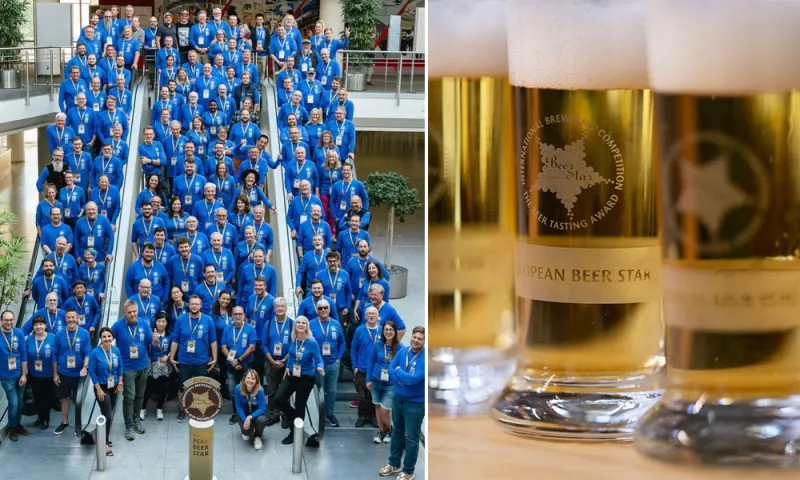
Photo: beer competition judges tasting flights glasses brewery, via cdn.brewersassociation.org
Somewhere in America right now, a taproom is printing new coasters. The coasters say 'Award-Winning.' The award came from a competition, the competition had judges, and the judges picked one beer out of thousands. Congratulations all around.
But let's ask the question nobody at the victory party wants to ask: how many people tasted that beer before it became 'the best'? Because if the answer is fewer than the number of people who can fit in the taproom's parking lot, we've got some explaining to do.
The Sample Behind the Slogan
Most major beer competitions work roughly like this: breweries pay an entry fee, ship bottles or cans to a central location, and a panel of judges — often drawn from a volunteer pool of industry folks, homebrewers, and certified cicerones — works through flights over a day or two. Each beer gets tasted by a small panel, scores get tallied, medals get assigned.
Notice what's missing from that description? Randomness. The beers in a competition aren't a random sample of American beer. They're a self-selected sample of breweries willing to pay an entry fee. The judges aren't a random sample of American drinkers — they're enthusiasts with trained palates, which is great for detecting flaws and questionable for predicting what your uncle will order at a backyard cookout.
So when a beer wins gold, what we actually know is: among the entries, on that day, in those glasses, judged by those people, this one scored highest. That's a real finding! It's just a much smaller claim than the coaster suggests.
Would a Real Taste Test Even Work?
Suppose we wanted to settle 'best beer in America' the way a statistician would. What would that take?
First, we'd need to define the population. Best for whom? A trained cicerone and a casual drinker who mostly drinks light lagers are, statistically speaking, different species. Any honest study would have to pick a population first — 'best according to regular American beer drinkers' is a defensible choice, but it's a choice, not a fact of nature.
Second, we'd need a random sample of that population, which means dragging a representative slice of American drinkers into a controlled setting. Then the hard part: blind tasting, randomized order, palate cleansers, and enough repetitions to weed out the noise. Taste perception is wildly variable — what you ate for lunch, whether you're dehydrated, the temperature of the sample, even how tired the judge is by flight number fourteen.
Then there's the ordering effect. Judges rate things differently depending on what came before. In wine research, the same wine gets systematically different scores depending on its position in a flight. Any rigorous design has to scramble order across participants, which multiplies the logistical complexity fast.
And here's the kicker: even if we did all this perfectly with thousands of participants, the results would very likely show a statistical tie at the top. Dozens of well-made IPAs would cluster within the margin of error, and the 'winner' would be whoever edged out the pack by an amount indistinguishable from luck. The statistically honest headline — 'Top Fifteen Beers Statistically Indistinguishable, Judges Enjoy Them All' — would bore everyone to tears. Which tells you something about why competitions don't run it that way.
The Medal Is a Sample Size of One Weekend
There's a deeper pattern here worth naming. Competitions of all kinds — beer, barbecue, chili cook-offs, state fairs — share a structural quirk: they produce outsized confidence from tiny inputs. A medal is binary. It says 'best.' But the process behind it is a small, convenience-sampled, one-time measurement of a subjective experience.
That's not a scam. Judges at good competitions are genuinely skilled, and blind tasting does eliminate the label bias that dominates everyday drinking (people rate the same beer differently when they can see the brand — a finding that should humble all of us). The problem isn't that competitions measure nothing. It's that a single data point gets dressed up as a census.
You see the same move everywhere. 'Voted best pizza in the city' usually means one publication's critics ate lunch. 'Top-rated' on a travel site means the subset of people motivated enough to leave a review. The medal, the plaque, the blurb — they're all converting a small, weird, one-shot sample into a claim about the whole population.
How to Read a Beer Medal Like a Statistician
You don't have to stop enjoying competition results. Just scale your confidence to the evidence:
- Category medals beat 'best in show.' Winning a crowded, well-judged category with many entries is more informative than a single overall winner decided by a final round.
- Repeat wins matter more than one. One gold medal could be luck. Three golds across different years and different judge panels is a pattern.
- Entry count is your sample size. A category with 400 entries tells you more than one with 12.
- Beware the marketing translation. 'Award-winning' is technically true of any beer that ever won anything. It's a sample size of one medal, compressed into an adjective.
The next time you see a brewery celebrating its gold, raise a glass anyway — the beer is probably good. Just remember what the medal actually certifies: not the best beer in America, but the best beer among the entries, per a few judges, on one afternoon, give or take a flight of palate fatigue.
N equals many. And in this case, many was never really in the room.