The Control Group Knew. It Worked Anyway. Now What?
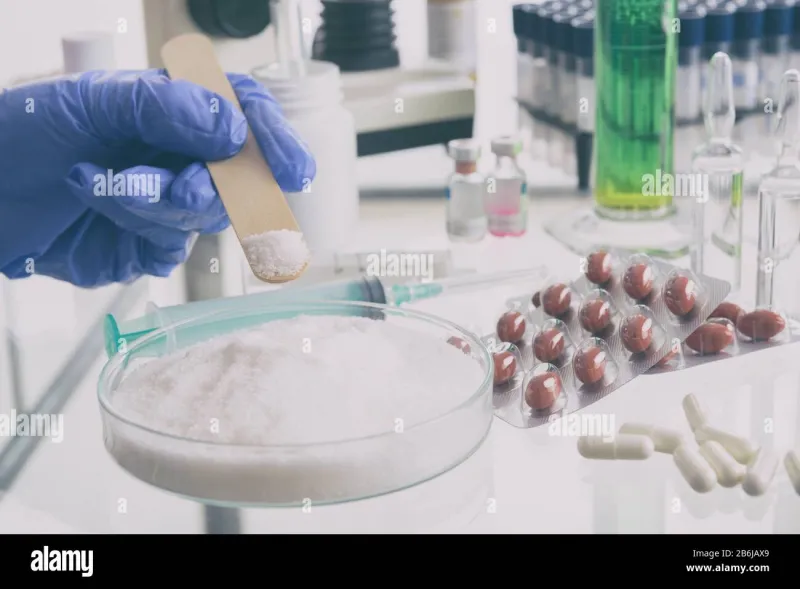
Photo: placebo pill bottle open on table clinical study, via c8.alamy.com
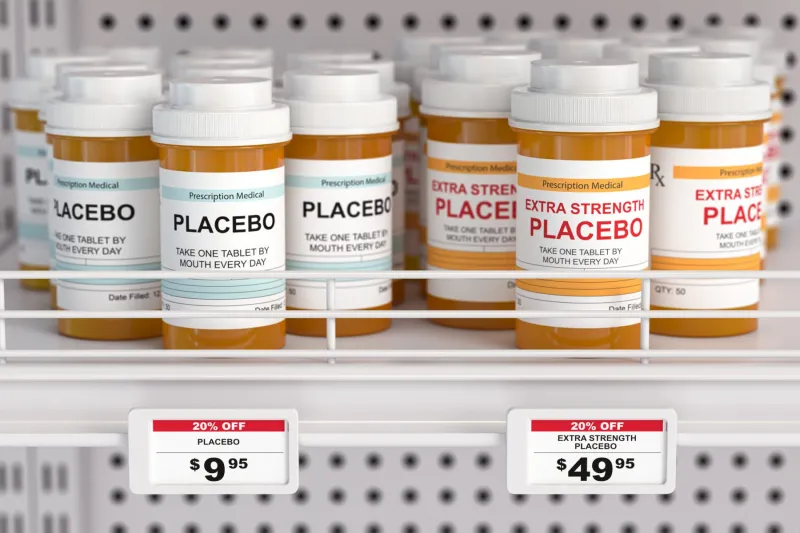
Here's a fun party trick for your next statistics get-together: tell someone that sugar pills work better when patients are told they're sugar pills. Watch them assume you're lying. Then show them the data from the irritable bowel syndrome trial out of Beth Israel Deaconess, where one group got open-label placebos — honest-to-goodness nothing pills, disclosed as such — and reported meaningfully fewer symptoms than the group that got no pills at all.
The finding isn't a fluke. It's shown up in chronic low back pain studies, in cancer-related fatigue research, in knee pain trials. Roughly a dozen decent-sized studies now suggest that a placebo can work even when the deception — long considered the secret ingredient — is removed entirely.
And that's the part that should make anyone who thinks carefully about evidence a little queasy. Because if the effect survives transparency, then something about how we've framed 'the control group' for the last seventy years is wobblier than we like to admit.
The Myth We Tell Ourselves About Blinding
The folk model goes like this: placebos work through deception. Patient believes pill is real → patient feels better → the real drug's effect is whatever's left over after you subtract the trickery. Blinding is the machinery that makes the subtraction possible.
The open-label result punches a hole in that story. If patients know the pill is inert and still improve, then the active ingredient isn't belief in the pill. It's something else — maybe the ritual of taking a pill, maybe the therapeutic encounter itself, maybe the simple act of doing something about a problem that had been making them feel helpless.
Researchers call these contextual effects. That's a tidy phrase for a messy reality: the entire apparatus around a treatment — the white coat, the follow-up appointment, the tracking app pinging you about your pain — is itself an intervention. The RCT was designed to filter that out. It may not be filterable.
Before You Throw Out Your Medicine Cabinet
Okay, deep breath. This is also the point where a lot of internet wellness content veers into 'so all medicine is a scam' territory, and we're not going there, because the data doesn't.
Open-label placebo effects are real but modest, and they cluster in specific terrain: subjective, self-reported symptoms. Pain. Fatigue. Nausea. Bloating. Conditions where the measurement instrument is, ultimately, a human being filling out a questionnaire.
What you don't see are open-label placebos shrinking tumors or lowering blood pressure to any clinically meaningful degree. Objective endpoints, the kind you can measure with a machine rather than a mood, tend to shrug off placebo effects — open-label or otherwise.
So the honest summary is narrower than the hype: for self-reported symptoms, the line between 'active treatment' and 'attentive ritual' is blurrier than the RCT assumes. That's a genuinely important finding. It's just not the one on the podcast thumbnails.
The Replication Problem Nobody Loves Talking About
Here's where it gets uncomfortable for the open-label crowd too: the effect sizes bounce around. A lot.
Some trials show robust differences between open-label placebo and no-treatment groups. Others show almost nothing. A 2021 systematic review found the effects were inconsistent across conditions, and meta-analyses keep flagging the same problems — small samples, heterogeneous outcome measures, and (irony of ironies) possible publication bias, where positive open-label studies get written up and null ones quietly retire to a drawer.
If you've read this site before, you know the drill: a phenomenon that only appears reliably in small studies is a phenomenon you should hold at arm's length. Open-label placebo research is where placebo research was decades ago — full of intriguing signals, short on the kind of large, preregistered, multi-site replication that separates a finding from a vibe.
Which is itself instructive. The field that discovered the placebo effect's power is currently wrestling with whether its own flagship result replicates. The microscope cannot easily examine itself.
What 'Control' Even Means When Everyone's Watching
But the deeper issue isn't whether open-label placebos are a miracle. It's what they reveal about the architecture of evidence itself.
A randomized controlled trial is built on an assumption: that the control group captures everything except the drug. But a control group in a pain trial isn't a passive baseline. Those patients are also being seen, tracked, asked how they feel, given attention. The comparison isn't 'drug vs. nothing.' It's 'drug plus ritual vs. ritual alone.'
Open-label trials make this explicit by moving the ritual into the experimental arm. And when the ritual arm performs, it forces an admission: our cleanest instrument, the RCT, has always been measuring a difference between two bundles of effects, not a drug suspended in a vacuum. Blinding reduces the contamination. It doesn't eliminate it.
None of this means we abandon the trial. It remains the best tool we have. But 'best tool' and 'truth machine' are different things, and the open-label literature is a standing reminder of the gap.
N Equals One, Wearing a Lab Coat
There's a final twist worth sitting with. The placebo response is famously variable — some people are strong responders, others barely register it. Which means the average treatment effect reported in a journal is a summary over a population of wildly different individuals.
Your response to a treatment — real or placebo — is a sample size of one. The trial tells you what happens on average. It cannot tell you which kind of responder you are. The open-label research just adds a wrinkle: part of what determines your response may be how much meaning you bring to the encounter.
So the next time you see a headline about a wonder drug beating placebo by a comfortable margin, ask the less comfortable question: beaten which placebo, in which ritual, measured how? The answer might be less certain than the confidence interval suggests — and a little intellectual humility about that is the cheapest medicine around.