Tonight's Dinner Is a Coin Flip: How Your Chain Restaurant Quietly Enrolls You in an Experiment
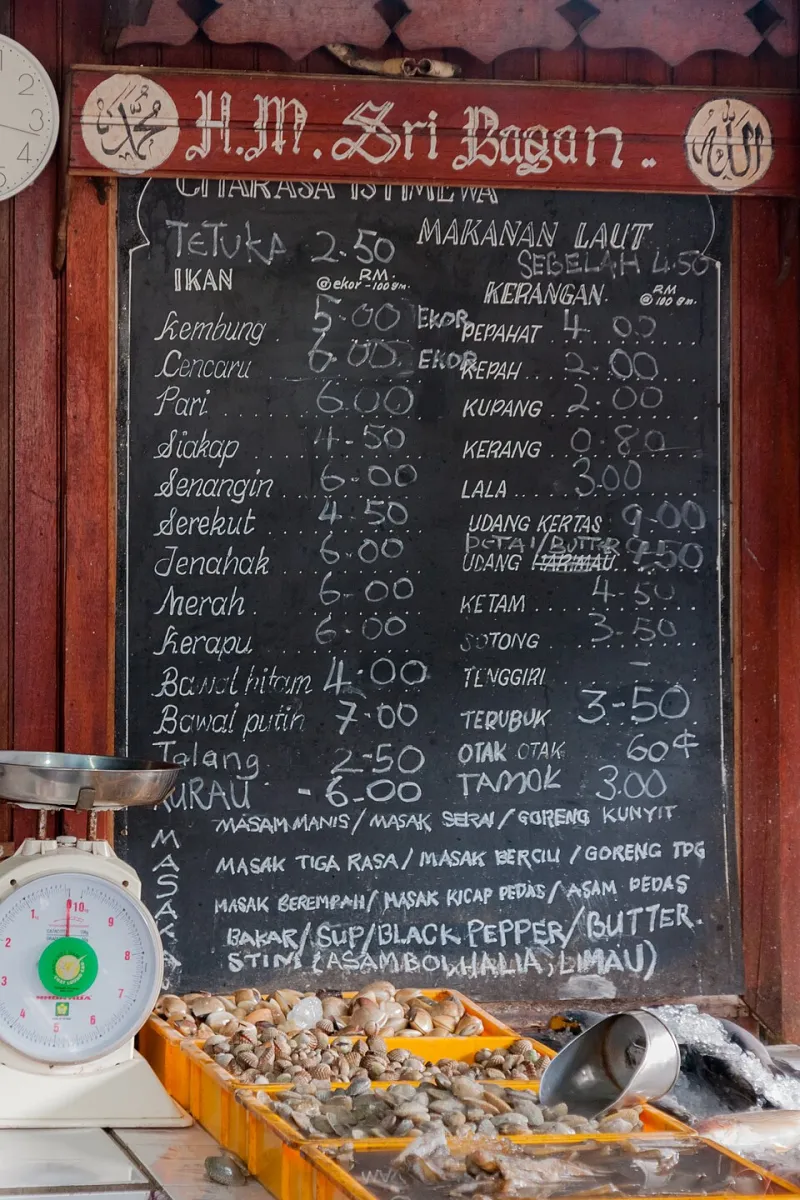
Photo: CEphoto, Uwe Aranas, CC BY-SA 3.0, via Wikimedia Commons
The Experiment You Ate Last Tuesday
Think back to the last time you ate at a chain restaurant. Maybe the menu felt lighter, with the salads moved toward the front. Maybe your server asked, with suspicious smoothness, whether you'd like to "add a loaded upgrade to any entree for $2.99." Maybe your receipt had a QR code where a coupon used to be.
None of that was an accident. It was a treatment condition.
Big American chains — the ones with thousands of locations stretching from a highway exit in Ohio to a food court in Phoenix — don't guess. They test. And the sample size, more often than not, includes you.
N Equals Many, Whether You Like It or Not
Here's the beautiful, slightly unsettling math of chain-restaurant testing. A single location might serve 1,500 guests a week. A chain rolling out a new menu design to 200 test stores is quietly collecting behavioral data on 300,000 people per week — a sample most academic researchers would trade a sabbatical for.
The core logic is the same as any randomized controlled trial: split the population, vary one thing, measure the difference. Want to know if anchoring a $38 steak at the top of the menu makes the $24 pasta feel like a bargain? Serve two menu versions to two matched groups of diners and compare what they order.
The diners never consented. They never knew there was a study. But statistically speaking, they were enrolled the moment they sat down.
Menu Engineering: The Original Quiet Test
Researchers have been studying how menus steer choices since at least the 1970s, when Cornell's School of Hotel Administration started dissecting what they called "menu engineering." The findings that came out of decades of this work read like a magician explaining the trick:
- Prices without dollar signs. Guests spend measurably more when the menu says "24" instead of "$24.00." The currency symbol is a small pain reminder; remove it, remove the flinch.
- The decoy dish. That eye-wateringly expensive platter nobody orders? It's not there to be ordered. It's there to make everything around it look reasonable.
- The golden triangle. Eye-tracking studies show diners' gaze tends to jump from the menu's center to the top right, then back to the top left. Guess where the highest-margin items live.
- Descriptive labels. Call it "Grandma's slow-braised pot roast" and sales climb. Call it "pot roast" and it doesn't. Same food, different numbers.
Chains took this academic playbook and industrialized it. When a national casual-dining brand redesigns a menu, it doesn't roll it out everywhere at once. It picks test markets — often a few hundred locations demographically matched to the rest of the fleet — and waits for the register data to speak.
Your Server Was Reading a Script (Probably)
Menu design is only half the story. The other half is human.
When a chain trains servers to say "Can I start you off with our famous appetizer trio?" rather than "Any appetizers?" — that phrasing came from somewhere. Usually from a pilot test. Someone measured conversion rates on both scripts across hundreds of shifts before the winning line went into the training manual.
Receipt layouts get tested too. So does the wording of the tip prompt on the payment terminal, the placement of the dessert pitch, the timing of the check drop. Every one of these is a variable, and every variable needs a control group. If your local franchise felt a little different last month, there's a decent chance your table was in the treatment group and the town next door was the control.
How to Spot a Live Experiment
You can't opt out of an experiment you can't see. But you can learn to see them. A few tells:
One thing is different. Real tests change a single variable — a new menu board, a new script, a new receipt. If your usual spot changed exactly one thing, that's not a redesign. That's a treatment condition.
It's only here. Chains don't test in every market simultaneously. If your friend two states over has never heard of the "Smoky Brisket Melt" you just ordered, one of you is in a regional pilot.
**The ask is oddly specific." Would you like to add grilled shrimp to any salad for $3.50?" isn't a server being enthusiastic. It's a measured upsell with a decimal point, which means someone counted how often it works.
You're asked to rate things out of nowhere. A table-side survey or a QR code after checkout isn't just feedback — it's often the measurement instrument for a test that's already running.
The Ethics of the Unmarked Control Group
Is any of this sinister? It's worth sitting with the discomfort before answering. Nobody's health outcome is at stake in a menu test. The worst-case scenario is that you order the nachos instead of the tacos.
But it's worth noticing the asymmetry. When researchers run a clinical trial, participants sign consent forms. When a company runs a marketing test, the "participants" are just customers having dinner. The sample sizes are enormous, the analysis is rigorous, and the people generating the data — the same people who are, in effect, the subjects — are the only ones in the dark.
The lesson from N Equals Many's corner of the internet is a familiar one: big samples produce big truths, and those truths are being harvested constantly, in places you'd never think to look. Not in a lab. Not in a hospital. At a two-top by the window, between the sweet tea and the check.
So next time the menu feels just a little different, or the script lands a little too smoothly, enjoy your meal either way. But know this: statistically speaking, you're not just the customer tonight.
You're the data.