The CPI Is a Sample, Not a Receipt: What 80,000 Prices Can and Can't Tell You
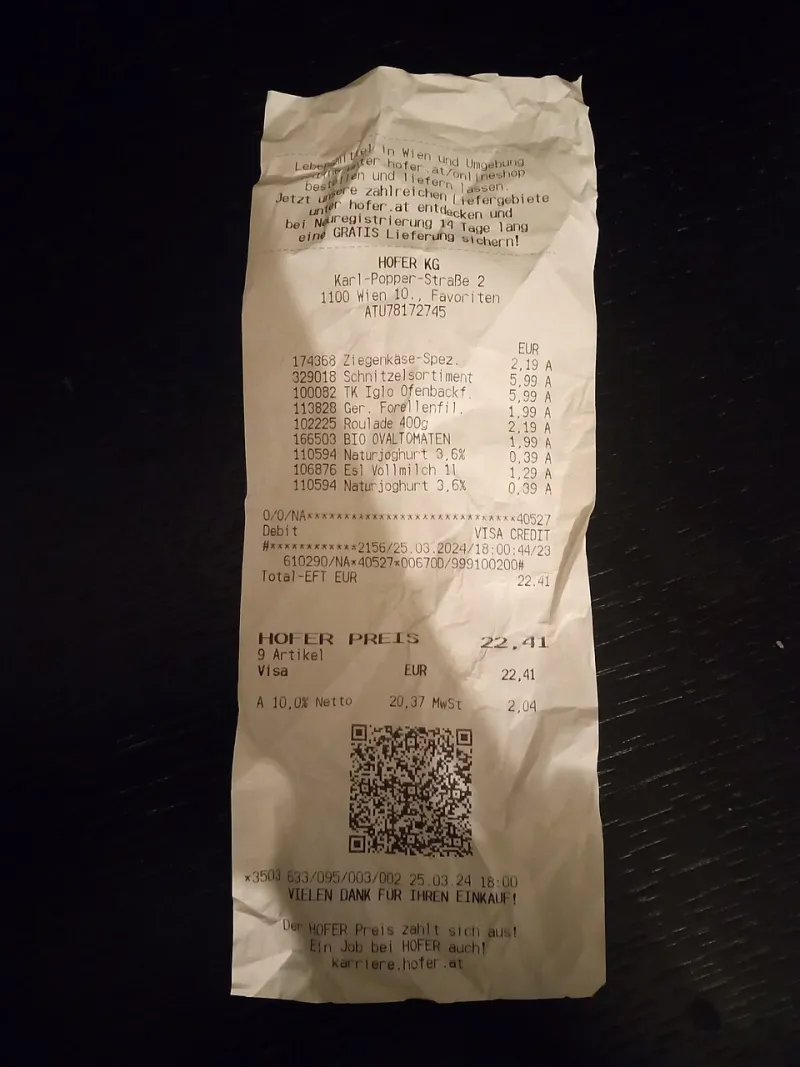
Photo: Grandmaster Huon, Public domain, via Wikimedia Commons
Every month, the Consumer Price Index lands like a verdict. Inflation is up. Inflation is down. Politicians cite it. The Federal Reserve watches it. Social Security checks and tax brackets move with it. It feels like the national cash register printed a total.
It did not. The CPI is an estimate built from a rotating sample of prices and a model of what Americans buy. That does not make it fake. It makes it a statistic, which means it has a method, a margin of error, and a set of choices underneath the headline.
The basket is a survey, not a census
The Bureau of Labor Statistics does not collect every price in America. It samples. Roughly speaking, the CPI draws prices from a rotating set of urban areas, stores, and specific items. The often-cited figure is about 80,000 prices per month, collected across tens of thousands of retail and service establishments. The sample rotates so that new products and new stores can enter.
The weights matter too. The CPI is not an unweighted average of all prices. It asks how much of the typical household budget goes to housing, food, transportation, medical care, and everything else. Those weights come from consumer expenditure surveys, which are themselves samples. They are updated, but not instantly. If your spending shifts hard toward rent or childcare, the national basket may not shift at the same speed.
That is the first thing to remember: the CPI is a sample of prices weighted by a sample of spending. It is not a live feed from your bank account.
When a price disappears, the number gets modeled
Real life does not hold still for a price index. A television model is discontinued. A store changes its packaging. A phone gets a better camera. A landlord raises rent. A hospital changes its billing codes. The BLS has to decide what counts as the same item and what counts as a different item with a different quality.
This is where hedonic adjustments come in. For products like electronics, the BLS may adjust for quality changes so that a price increase is not automatically counted as inflation if the product also improved. That is a reasonable idea, and it is also a modeling choice. Reasonable people can argue about how well it works.
Shelter is another big one. The CPI does not simply track home sale prices. It uses rents and owner's equivalent rent, which is an estimate of what homeowners would pay to rent their own homes. That is a model of housing costs, not a direct observation of every mortgage payment. When people say the CPI does not match their experience of housing, this is part of why.
Missing prices also get imputed. If a collector cannot find a price for a specific item in a specific store, the index may carry forward or model a value. Imputation is not cheating. It is how you keep a monthly series going when the world refuses to be complete. But it is another reminder that the number is constructed.
Your personal CPI is a sample of one household
Here is where the quantified-self angle gets useful. The national CPI answers a national question: how much are prices changing for a broad basket of urban consumer spending? Your personal inflation answers a different question: how much are prices changing for the things you actually buy?
Those can diverge a lot. If you rent in a hot market, pay for childcare, take expensive medication, or commute long distances, your basket is not the national basket. If you own your home outright, have employer-paid insurance, and eat mostly groceries, your experience may look milder than the headline.
You can build a personal price index if you want. Pick a consistent basket of things you buy regularly. Track the same items, same sizes, same stores. Record the prices monthly. Weight them by how much you actually spend. Do not change the basket every time you get bored, or you will be measuring your shopping habits, not inflation.
That exercise will not settle a political argument. It will show you why inflation feels different to different households. Your personal index is a sample of one. It is useful for budgeting. It is not a national statistic.
A useful estimate with error bars
The CPI remains one of the best-known measures of inflation, and it is used in decisions that affect millions of people. That is exactly why it deserves to be read as an estimate rather than a verdict. Sampling error, quality adjustments, shelter imputation, and lagging weights are not scandals. They are the mechanics of turning a messy economy into a monthly number.
So the next time you see the CPI headline, imagine the survey behind it: tens of thousands of prices, a rotating basket, a lot of careful modeling, and a margin of error that never makes the chyron. The number is real. It is just not a receipt.